
Guide
NYC Trash Containerization Rules, and Which Bin You Actually Need
Who needs the Official NYC Bin, who can use any rigid 55 gallon container, set-out times, and what to buy for a 12 unit versus a 40 unit building.
5 min read · First Ave Supply, 1587 First Avenue

The containerization rules changed what a New York City building may put at the curb, and the rules are not the same for every building. The short version: small buildings must use the Official NYC Bin, which we do not sell, and larger buildings and businesses can use any rigid container with a secure lid up to 55 gallons, which we can supply. Here is the detail.
Buildings with 1 to 9 residential units: the Official NYC Bin
Properties with 1 to 9 residential units are required to set trash out in the Official NYC Bin. The same requirement covers certain special use properties on DSNY collection, including City agencies, nonprofits, houses of worship and professional offices inside residential buildings.
We do not sell the Official NYC Bin and we are not going to sell you something else and call it compliant. The City sells it through its own channel: the bins are available at New York City Home Depot locations for in-store pickup, and for delivery through the delivery apps the City lists. Order from the City, not from a supply house.
DSNY: Official NYC Bin requirements and where to buy
Buildings with 10 or more units, and all businesses
Buildings with 10 or more residential units, and businesses, are not tied to the Official bin. They may use any rigid container with a secure lid, 55 gallons or less. That is the container we can supply, along with the liners that go in it.
One caveat, stated because it is real. The City has begun rolling out stationary on-street containers, called Empire Bins, for larger residential buildings, starting in specific community districts rather than city wide. In a district where that program is live, buildings of 31 or more units are directed to the on-street containers, and buildings of 10 to 30 units choose between the on-street containers and official bins. If your building is in a district where that rollout has reached you, DSNY will tell you and your options are narrower than the general rule above. Check the DSNY page for your district rather than taking a general answer from us.
DSNY: residential waste containerization · DSNY: collection laws for businesses
Enforcement
Full enforcement of the Official NYC Bin requirement began on Tuesday, 8 September 2026, at the end of the warning period. Fines for setting trash out wrongly escalate with repeat offences, starting at $50 for a first offence and rising from there. Confirm current penalty amounts on the DSNY page before you quote them to an owner.
DSNY: collection laws and set-out rules
Set-out times
- In a bin with a secure lid, 55 gallons or less: set out after 6:00 PM.
- Bags placed directly on the curb, where a building is still permitted to do that: after 8:00 PM.
- Everything out by midnight unless your building has been told otherwise.
The two hour difference is the whole reason buildings containerize voluntarily. It takes two hours off the time the pile sits on your sidewalk, and it is the difference between a clean front and a rat problem.
What a secure lid means in practice
DSNY does not want a container that a rat can get into or a wind gust can open. In practice that means:
- A rigid container, not a bag in a frame, and not a soft-sided cart.
- A lid that actually latches or seats tight to the rim, and stays shut when the container is tipped or knocked.
- 55 gallons or less. A 65 gallon cart is over the limit for set-out, even though a 65 gallon liner is a perfectly normal thing to use inside a compactor room.
- Not overloaded. If the lid cannot close because the bin is stuffed, the bin is not compliant, and that is the most common way buildings get written up.
- Intact. Cracked bodies, missing lids and broken hinges are all written up.
Buy enough containers that every lid closes on a normal night, not on a good night. Under-buying bins is how a building ends up with the overflow bag sitting next to the can, which is the thing the rule exists to stop.
A 12 unit building versus a 40 unit building
12 units. You are over the Official bin threshold, so you can buy standard 55 gallon rigid containers with secure lids. Work out your normal night volume, then buy enough containers to hold it with the lids closed, plus one spare for the heavy night after a weekend. Line them with 55 gallon liners at a contractor thickness, because a liner that tears in the can turns the can into the thing your porter has to wash out. A building this size usually runs liners by the case and keeps a second case on hand.
40 units. At this size the question is usually staging, not container count. You need enough containers for peak night volume, a place to keep them off the sidewalk between collections, and a porter routine that gets them out after 6:00 PM and back in promptly. Buy liners by the case in a heavier mil, since the bags are being dragged from a compactor room or down a service corridor rather than carried ten feet. Also check whether the on-street container rollout has reached your district, because at 31 units and up that changes the answer.
We carry the liners. We do not carry the Official NYC Bin, and if you need one, the City is the place to get it.
Liners for the bins you can actually use.
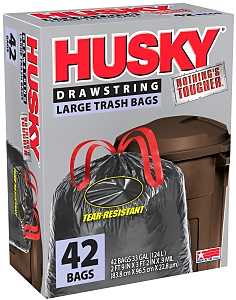
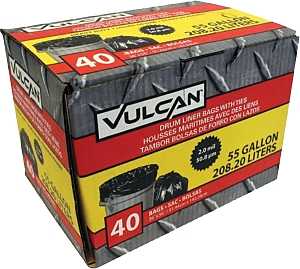
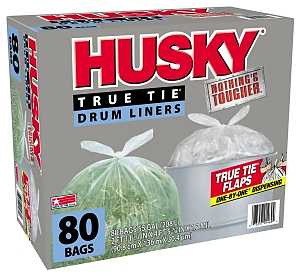
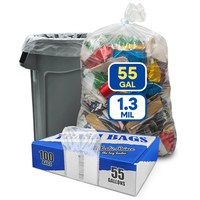
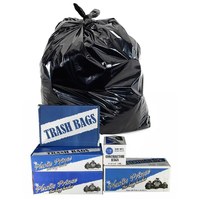
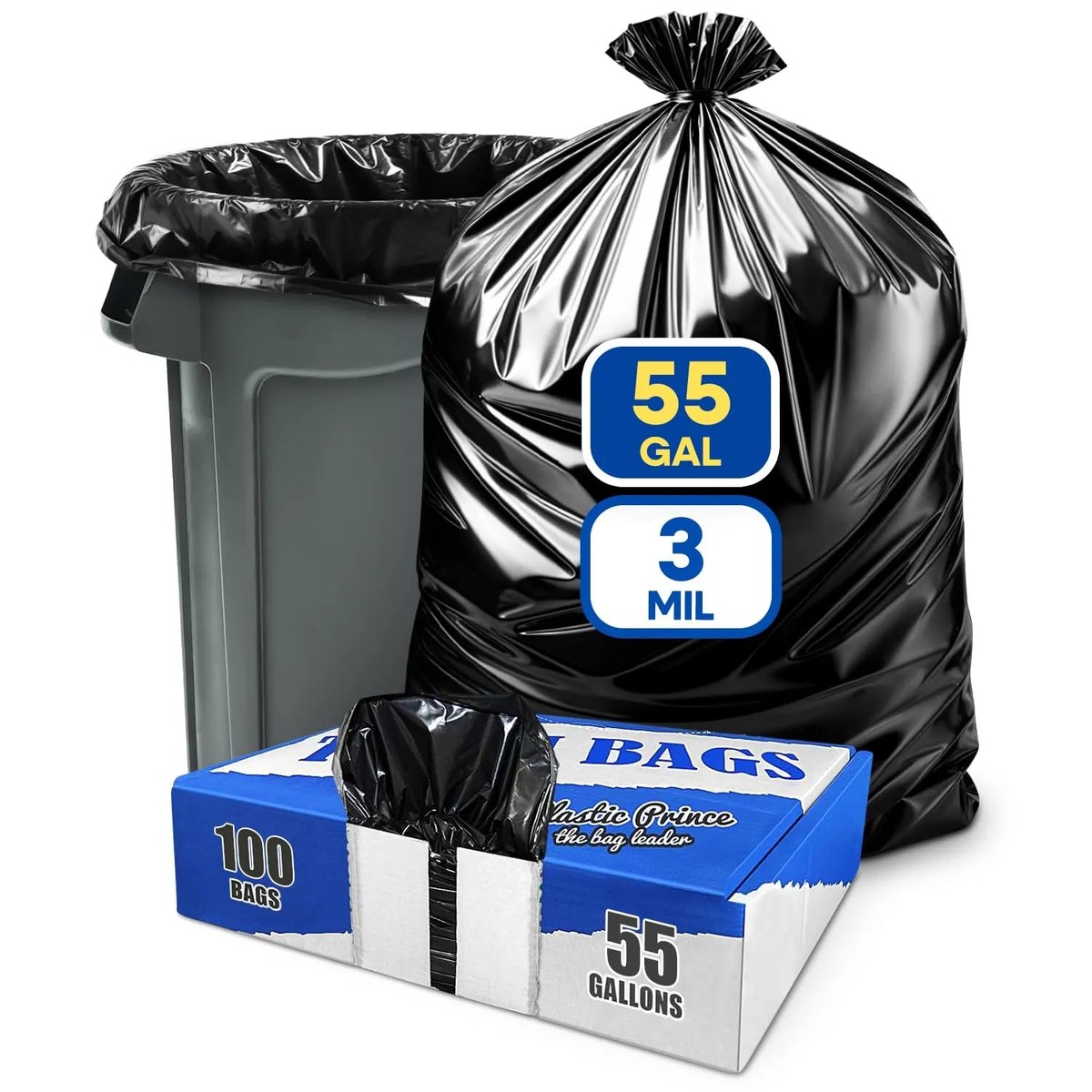
55 and 65 gallon can liners, by the case:
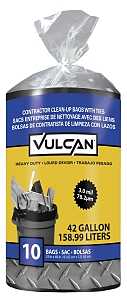
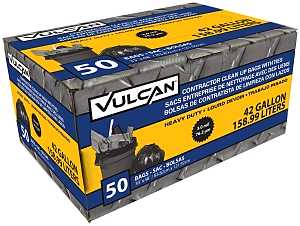
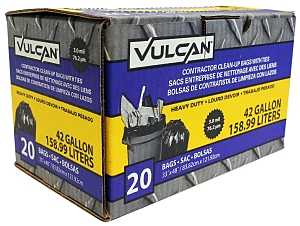
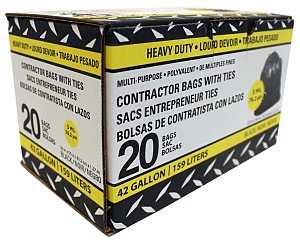
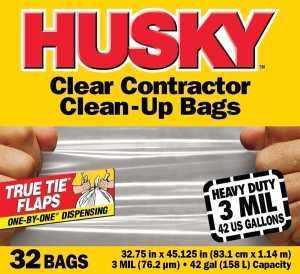
Contractor bags for renovation and bulk clean-out:
All contractor bags and can liners. Same-day Manhattan delivery on what is on the shelf at 1587 First Avenue, or call (212) 535-8400 and we will put a case aside.
Get a bin and liner quote for your building
Give us the unit count and we will quote the liners and containers that fit your building. The unit count decides which rules apply to you, so it is the field that matters most.
Shop this guide
18 itemsPrices shown are register prices. Sign in to see your account pricing.





More guides
- Which Steam Vent Do I NeedOne pipe steam, plain English, in about four minutes.4 min read

- What Ice Melt Does to Concrete, Floors and Your LiabilityWhy the cheapest rock salt costs a building more than it saves: spalling, ruined lobby floors, dead tree pits and slip and fall exposure.7 min read

- Safe Step Ice Melt, Which Bag for Which JobWhich Safe Step bag suits a sidewalk, a garage ramp, a roof or a pet area, with the working temperatures from the product data.4 min read

- Ice melt before the first freezeBuy it in October. Four minutes.4 min read

- Can liners explained, which bag your building actually needsMatch liner dimensions, mil thickness and color to office cans, Brute containers, recycling stations, compactors and renovation debris.3 min read

- Which garbage bag do you use?Size by can, not by guess.4 min read
- Basement and closet lightingPorcelain keyless, pull chain sockets and the flush mount that replaces a bare bulb. The unglamorous fixtures that run a building.4 min read

- Batteries at the counterNine volts for smoke detectors, coin cells for the key fob, and why a building buys the sixteen pack.3 min read

- Drain daySlow, stopped, or the whole line. Three different problems.4 min read

- The turnover electrical kitWhat to buy once so the apartment is done in one trip.4 min read

- Toilet seats and bathroom turnoverRound or elongated, and the three numbers that decide it.3 min read

- Benjamin Moore at First AveAura, Regal Select, Advance, ben and Super Hide. Which line belongs on which wall, and which one a building actually buys.5 min read

- Paint prep, the painters kitEverything that goes in the bag before the paint does. Tape by surface, cloths by weight, grit by coat.4 min read

- Patch, fill and glueSpackle, joint compound, plaster of paris and the glue that actually holds. What to use on which hole.5 min read

- Roller liners and traysNap thickness by surface, liners by the sleeve, and why a metal tray outlives six plastic ones.4 min read

- Taping knivesWhich blade for which job, from the dollar plastic scraper to the fourteen inch skim blade.4 min read

- Hang anything without calling the superPlaster, lath, brick or tile. The wall decides, not the hook.4 min read

- High security compared, Mul-T-Lock, Medeco, MarksWhat restricted actually means, and what a building is buying.5 min read

- Mops, brooms and the janitor closetWhat a porter actually uses every day, and the difference between a house broom and a lobby broom.4 min read

- Padlocks and lock boxesShackle size, keyed alike, and the lock box that lets a contractor in without you being there.4 min read

- The NYC pest kitGlue boards by the case, bait where it belongs, and the foam that ends the mouse problem for good.4 min read

- Window washingOne pass, top to bottom, wipe the blade. Why paper towels leave streaks and a squeegee never does.3 min read

- The odd bulb wallAppliance bulbs, night lights, circline, bi-pin and candelabra. The bulbs the big stores stopped carrying.4 min read

- Window guardsThe January notice, and what actually satisfies it.4 min read

- Birch or CDX, and Which Sheet Your Job Actually NeedsCDX by the sheet plus a cut charge, birch by the square foot, and the point where buying the whole sheet is cheaper than buying the cuts.6 min read

- Getting Sheetrock Into a Manhattan Walk-UpWhich board to buy, what fits the elevator, and what to have ready before the truck arrives at a walk-up.6 min read
- How Same-Day Delivery Actually WorksThe cutoff, the rates, and what happens when an order mixes shelf stock with next truck items.5 min read
- Gloves by the dozenNitrile by the box, coated knit by the pair, and what a building should keep in the closet.3 min read

- Scotch and 3M tapes by jobDuct, electrical, foil, thread seal and mounting. Which tape belongs on which job, and the three places people use the wrong one.4 min read
